Short answer: for most Victoria owners, a hot tub is worth it if it’s the right size, kept close to the house and looked after locally — and our mild, wet winters mean you’ll use it twelve months a year.
A hot tub is a real purchase, and it deserves a real answer to “is it worth it?” Hot tubs get sold on health claims more than almost anything else we stock. Some of it holds up and a fair amount of it does not, so here is what a hot tub does for you, with the research where there is some and our own experience where there isn’t.
Better sleep: the benefit with the best evidence
A systematic review pooling thirteen studies found that warm bathing one to two hours before bed shortened the time people took to fall asleep, and improved both sleep efficiency and how rested they said they felt. The mechanism is not the heat itself but the cooling afterwards: warming the skin draws blood out to the hands and feet, so core temperature falls faster once you get out.
One caveat worth knowing: those trials used water at 40 to 42.5 °C, and a hot tub is normally capped at 40, so you are at the bottom of that range rather than the middle of it.
Sore joints and arthritis
This is the reason most of our customers give, and the evidence behind it is thinner than you would expect. A Cochrane review of mineral-bath therapy for osteoarthritis pooled seven trials and around 500 patients, and found a possible improvement in pain and quality of life against no treatment, while rating the evidence itself weak because the studies were small and poorly conducted. Those were mineral baths, too, not a home hot tub.
What we can tell you is what we hear across the counter: people with long-standing joint trouble are the ones who use their tub nearly every day.
Muscle recovery and massage
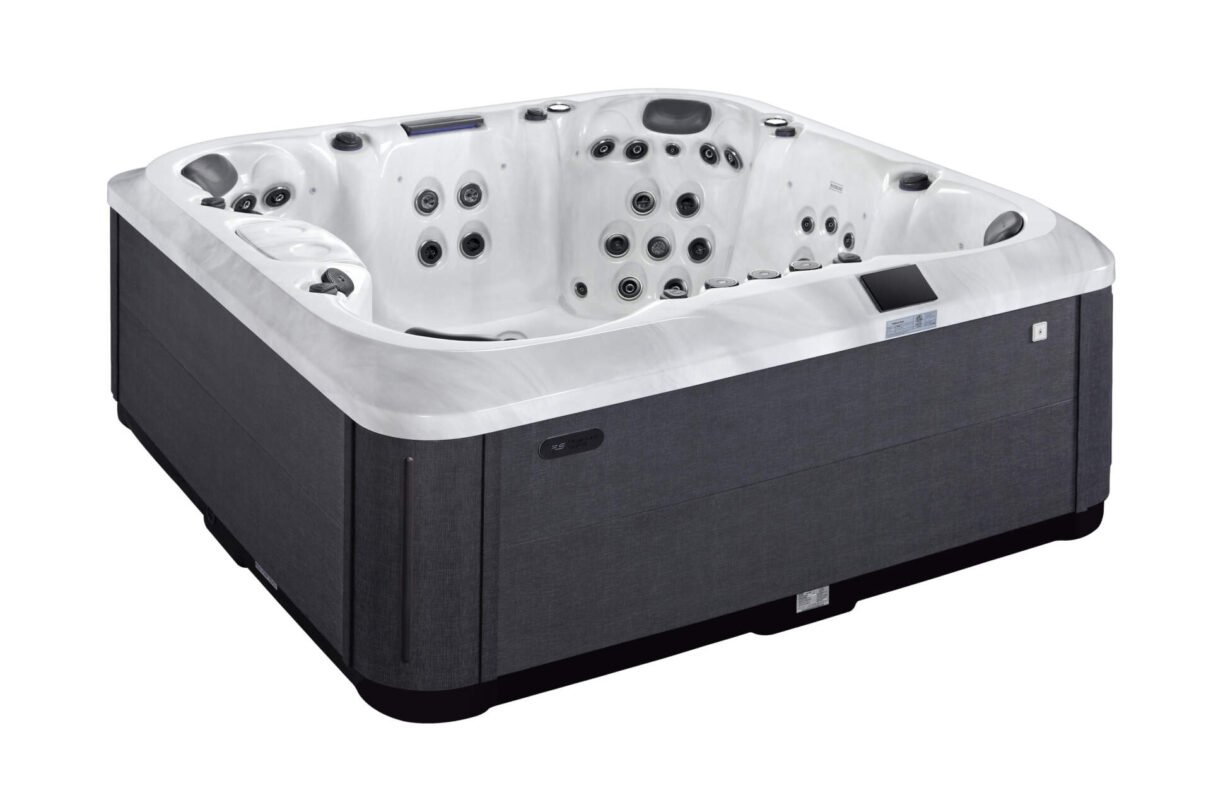
Jets are hydrotherapy, not decoration. The mix of water and air pressure works knots in shoulders, backs and legs in a way a hot bath can’t. Whether you garden, work a trade, cycle or sit at a desk all day, twenty minutes in the tub is a good way to let the day out of your back. Different seats target different areas, which is why it’s worth sitting in a few tubs before you choose, rather than comparing jet counts.
Stress, and the part nobody can measure
This is what most people buy one for, and we are not going to dress it up as science. There is research on relaxation and warm water, but it is small, short and mostly self-reported, and we would not lean on it.
What we have instead is four decades of customers telling us the same handful of things: that it is where arguments get settled, that it is the one stretch of the day nobody interrupts, and that the people who use theirs most are the ones who put it closest to the back door. That is experience rather than evidence, but it is the honest answer to why people keep them for decades.
Time together
A hot tub is the one place in the house where nobody has a screen. Couples talk. Teenagers who won’t sit at the dinner table will sit in a hot tub. Friends come over in February. It quickly becomes the most-used spot in the backyard, year-round.
Fitness (swim spas)
If exercise is the goal, a swim spa gives you a current to swim or run against at home, plus a hot-tub seating area. It’s the practical alternative to a pool on a Victoria-sized lot. We stock the Platinum Eros Pro, which has a full-width current rather than a narrow stream down the middle.
It’s usable twelve months a year here
This is the Victoria-specific point. Our winters are mild, our evenings are cool, and it rains. A hot tub is better in November than in July — and unlike a pool, you’ll use it in November.
The value question
A tub you use four nights a week for ten years costs very little per soak. The way to protect that value is simple: buy a well-insulated tub, keep the water balanced, and have it serviced by people who’ll still be here in ten years. That’s the part we take seriously.
What a hot tub won’t do
It won’t detox you, flush toxins or burn off calories. None of that survives contact with the evidence. It won’t reliably bring down your blood pressure or fix your cholesterol: a 2025 review pooling twenty randomized trials of passive heating found no clear improvement across most cardiometabolic and vascular measures. And it doesn’t replace exercise, though a separate meta-analysis of repeated hot-water immersion did find a lower resting heart rate.
How far the evidence goes
The sleep finding is the only one here we would call solid, and even that comes from studies of baths and showers rather than hot tubs. Everything else is weak, mixed or simply absent.
Passive heating has been studied far less than exercise, the trials that exist are mostly small and short, and the claims that sound strongest (detox, weight loss, blood pressure) are the ones with the least behind them. We would rather you bought a hot tub for the evening it gives you than for an outcome the research cannot promise. None of this is medical advice.
Using a hot tub safely
Keep the water at 40 °C or below, and lower if you are planning a long soak. Do not drink alcohol in it. Start at ten to fifteen minutes and see how you feel, and get out if you become lightheaded.
Talk to your doctor first if you are pregnant (raised core temperature is a real concern in early pregnancy), and likewise if you have heart disease, unstable or low blood pressure, or any nerve damage that affects how well you feel heat. Never let children use one unsupervised, and keep the cover locked whenever it is not in use.
What makes the difference between “great” and “sits there”
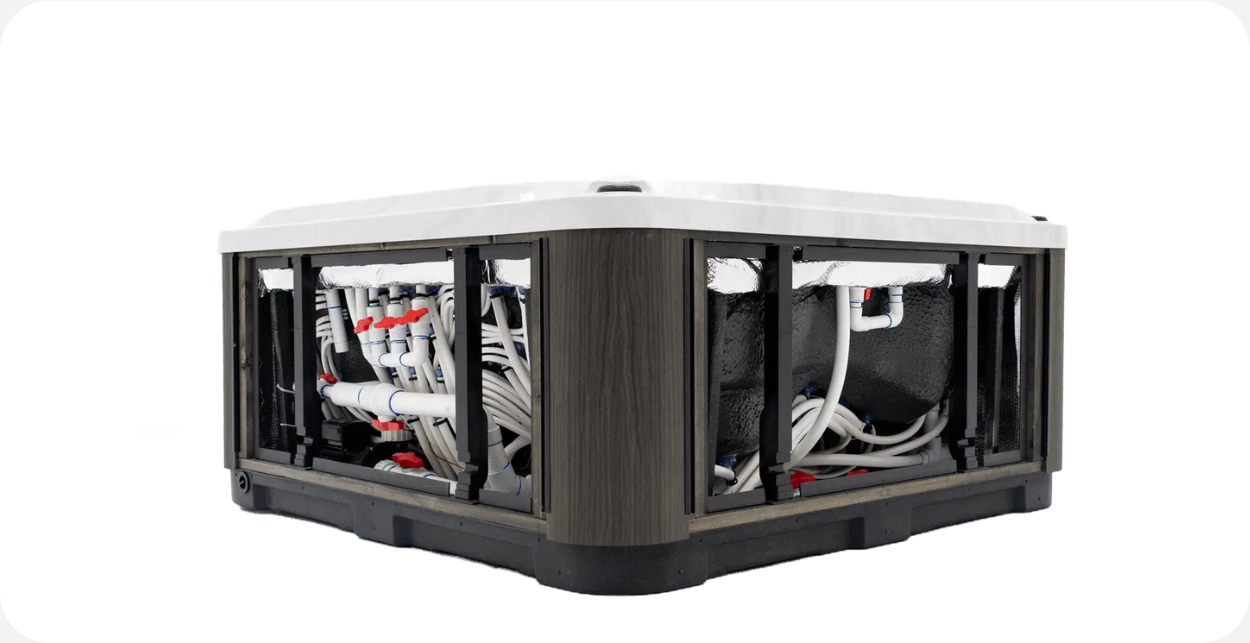
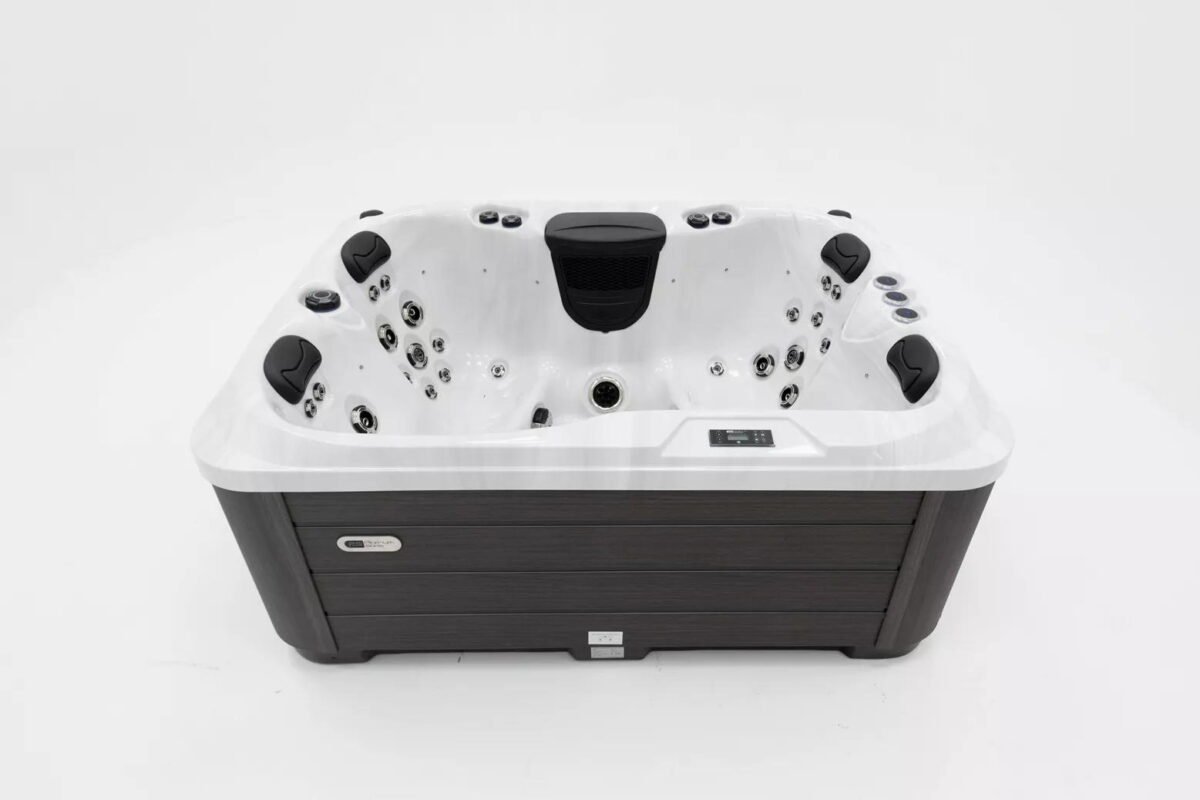
Owners who love their tub have three things in common: it’s the right size for how they use it (not the biggest they could afford), it’s easy to keep clean (good filtration and water care), and someone local looks after it. Get those right and everything above follows.
Come and see them in person. Our Victoria showroom has 60+ spas side by side, and our guide to what a hot tub costs in Victoria covers the price side. Drop in any day we’re open, or book a free expert session and we’ll have your shortlist ready.
References
- Haghayegh et al., Sleep Medicine Reviews 2019: systematic review and meta-analysis of water-based passive body heating before bed; 17 studies included, 13 pooled for analysis.
- Verhagen et al., Cochrane Database of Systematic Reviews 2007, summarized in the Journal of Rheumatology 2008: balneotherapy for osteoarthritis; 7 trials, 498 patients.
- Systematic review and meta-analysis of randomized controlled trials of passive heating and cardiometabolic and vascular health, 2025: 20 trials, 2 to 15 weeks.
- Sotomaior et al., Physiological Reports: hot-water immersion and the cardiovascular and cardiorespiratory health of healthy adults, systematic review and meta-analysis.